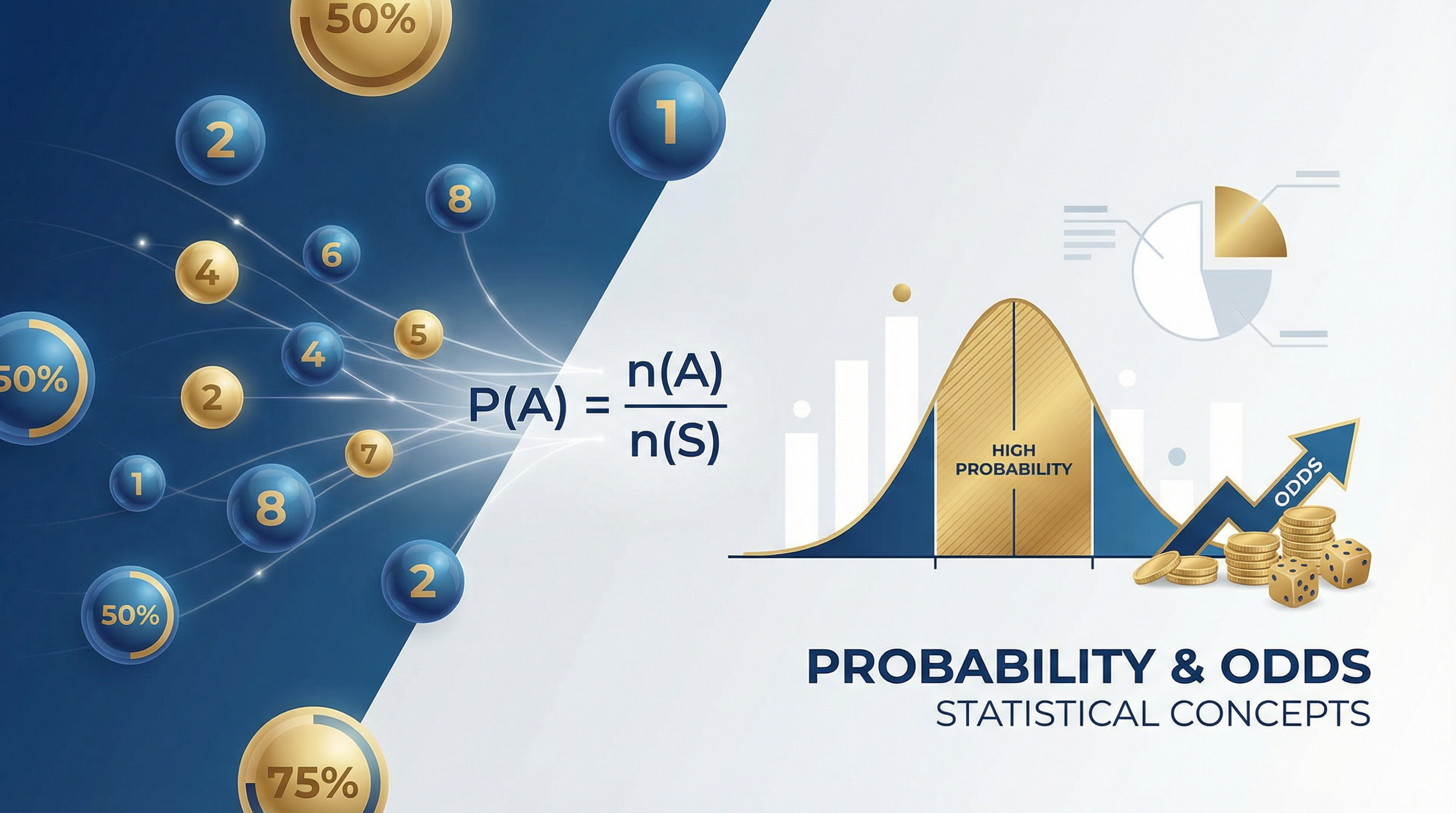
Understanding Lottery Odds
When considering lottery participation, understanding the odds of winning is essential. Lottery odds are calculated based on the total number of possible combinations that can be drawn. The larger the pool of numbers and the more numbers you need to match, the lower your odds of winning. This article explores the odds associated with major lottery games and what these numbers mean for players.
How Lottery Odds Are Calculated
Lottery odds are determined by combinatorics—the mathematical field dealing with combinations and permutations. For a lottery game where you select 5 numbers from a pool of 69, and then 1 bonus number from a pool of 26, the total number of possible combinations is calculated using the combination formula. This astronomical number represents the odds against winning the jackpot.
The odds of winning any prize are much better than winning the jackpot alone, as there are multiple prize tiers for matching different numbers of balls. However, even these odds remain quite low compared to other games of chance.
Prize Tiers and Their Odds
Most major lottery games offer multiple prize tiers, allowing players to win smaller prizes even if they don't match all numbers. Here's a typical breakdown of prize categories and their approximate odds:
| Prize Tier | Numbers Matched | Approximate Odds |
|---|---|---|
| Jackpot | All 6 numbers | 1 in 292 million |
| Second Prize | 5 numbers (no bonus) | 1 in 11.7 million |
| Third Prize | 5 numbers + bonus | 1 in 913,129 |
| Fourth Prize | 4 numbers + bonus | 1 in 36,525 |
| Fifth Prize | 4 numbers | 1 in 913 |
| Sixth Prize | 3 numbers + bonus | 1 in 361 |
| Seventh Prize | 3 numbers | 1 in 109 |
| Eighth Prize | 2 numbers + bonus | 1 in 56 |
| Any Prize | Any winning combination | 1 in 25 |
Note: These odds are approximate and based on typical lottery game structures. Actual odds may vary depending on the specific lottery game and any rule changes.
Comparing Lottery Odds to Other Events
To put lottery odds in perspective, consider these comparisons. Your odds of winning the jackpot (1 in 292 million) are roughly equivalent to being struck by lightning multiple times in your lifetime. You're more likely to be dealt a royal flush in poker, become a professional athlete, or even be attacked by a shark than you are to win the lottery jackpot.
Even winning smaller prizes requires significant luck. While the odds of winning any prize are better (approximately 1 in 25), most of these prizes are modest and may not exceed the cost of the ticket.
The House Edge in Lottery Games
Unlike some gambling activities, lottery games have a significant "house edge"—the mathematical advantage held by the lottery operator. Typically, lottery operators retain 30-40% of all ticket sales, with the remainder allocated to prizes and administrative costs. This means that over time, players collectively lose money, and the lottery operator profits significantly.
This is fundamentally different from games where skill plays a role. In lotteries, no strategy, system, or approach can overcome this mathematical disadvantage.
Important Disclaimer: Play Responsibly
⚠️ Responsible Gaming Notice
The odds of winning a lottery jackpot are extremely low. Understanding these odds is crucial for making informed decisions about lottery participation. The odds presented in this article demonstrate that lottery games are designed with a significant mathematical advantage for the operator, not the player.
Lottery tickets should never be viewed as an investment or a reliable way to generate income. They are games of pure chance where the mathematical expectation is negative—meaning that over time, players will lose money. Only participate in lottery games with money you can afford to lose completely.
If you find yourself spending excessive amounts on lottery tickets, experiencing financial difficulties, or using lottery play as a way to solve financial problems, please seek assistance from a responsible gambling organization or counselor.
Remember: The lottery is entertainment, not a financial strategy. Play responsibly and within your means.
Conclusion
The odds of winning a lottery jackpot are astronomically low, and even winning smaller prizes requires significant luck. While lottery games can be entertaining, they should never be considered a viable financial strategy or investment. Understanding these odds helps players make informed decisions about their participation and budget allocation. If you choose to play, do so responsibly, with money you can afford to lose, and always remember that the mathematical odds are against you.